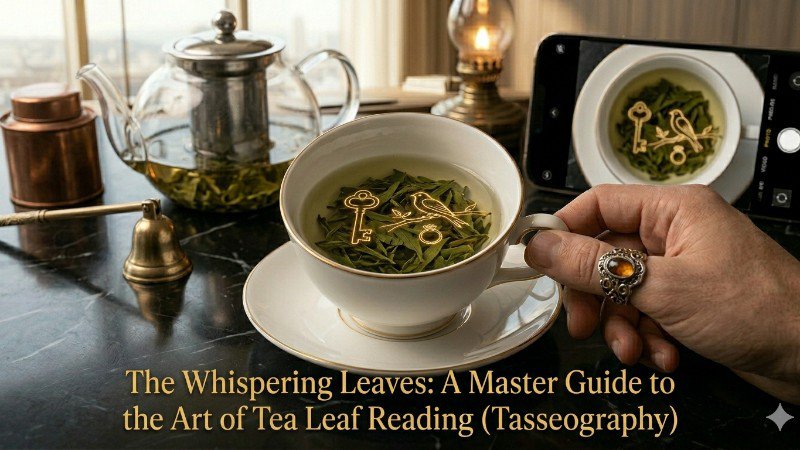
The Whispering Leaves: A Master Guide to the Art of Tea Leaf Reading (Tasseography)
The Poetry of the Steep: What is Tasseography?
While coffee reading is often perceived as visceral and intense, Tasseography—the sacred art of reading tea leaves—is a more delicate, poetic form of divination. Rooted in ancient traditions and later refined in the royal courts of Europe, it is the practice of interpreting the organic shapes and "threads" left by tea sediment. It is not merely fortune-telling; it is a sensory dialogue between the seeker’s subconscious and the fluid dynamics of the natural world. In this ritual, the tea acts as a liquid mirror, capturing the subtle vibrations of the person drinking it before they are crystallized into physical patterns on the porcelain.
Who Started Tea Leaf Reading? A Global Heritage
The origins of Tasseography are a fascinating blend of East and West. It began in Ancient China, where Taoist monks read the patterns in tea cups to seek spiritual alignment and omens of the harvest. However, the practice as we know it today flourished in Europe during the 17th and 18th centuries, shortly after tea was introduced from Asia. It became a favorite pastime in Victorian parlors, where it was viewed as a sophisticated, intellectual way to unlock the secrets of the heart. During this era, "Tea Rooms" became sanctuary spots where the art was passed down from generation to generation, often through a maternal lineage of "Wise Women."
What Does the Tea Leaf Reading Reveal?
A tea leaf reading reveals the energetic "weather report" of your life. It doesn't just show static, unchangeable events, but the current trajectory of your soul based on your present frequency. A deep reading reveals:
Imminent News: Social interactions, letters, or digital messages arriving shortly.
Hidden Obstacles: Subtle blockages or "invisible" people influencing your decisions.
The "Shadow" and the "Light": It uncovers deep-seated emotional patterns and the ultimate potential for success in love, health, and career.
Karmic Roots: Symbols at the bottom often reveal ancestral influences that are still shaping your modern reality.
How to Do Tea Leaf Readings: A Step-by-Step Masterclass
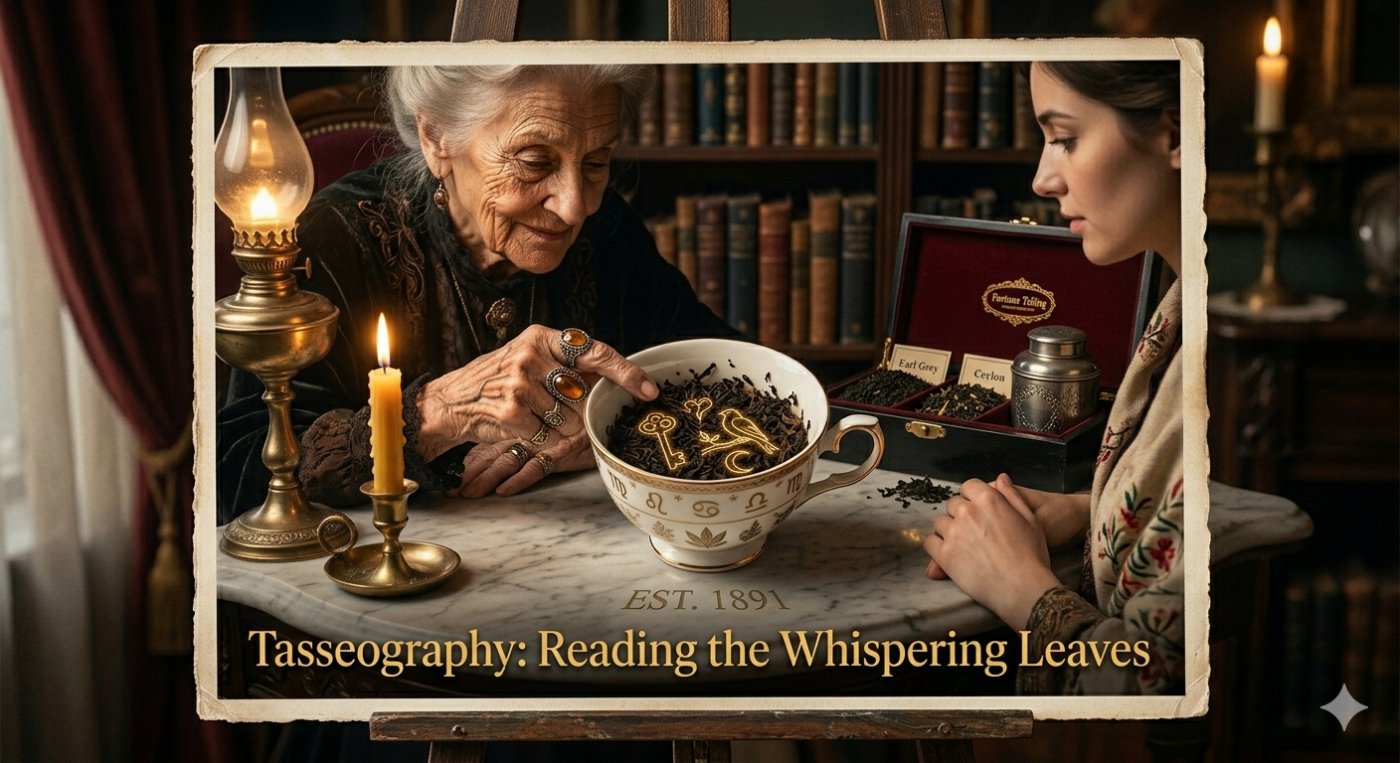
To perform an authentic reading that carries spiritual weight, follow this precise ritualistic sequence:
The Sacred Brew: Use high-quality loose leaves directly in the cup. Do not use a strainer; the leaves must be free to absorb the water’s energy.
The Infusion of Intent: Drink the tea slowly. As you sip, breathe your inquiry into the cup. Leave about a teaspoon of liquid at the bottom to allow the leaves to move.
The Three Clockwise Swirls: Holding the cup in your left hand (the hand closer to the heart), swirl it clockwise three times. This movement aligns the leaves with the natural flow of time.
The Decanting: Turn the cup upside down onto a saucer. Let the liquid drain completely for at least one minute. This "silence" is when the leaves settle into their final prophetic positions.
The Revelation: Turn the cup upright and begin interpreting from the handle (which represents the seeker) moving toward the rim.
Which Tea is Best for Reading? (The Master’s Choice)
The technical answer for the most accurate results is Loose-leaf Black Tea.
Preferred Varieties: Earl Grey, Darjeeling, or Ceylon are the gold standard for practitioners.
Why? These varieties have larger, more robust leaves that form clearer, more recognizable symbols. They provide a high-contrast visual against white bone china. Avoid green tea or fine herbal infusions (like chamomile), as their "dusty" or very small particles often create a "muddy" appearance, making it nearly impossible to distinguish clear shapes.
Is Tea Leaf Reading Real and Accurate?
Is it real?
Scientifically, it is a form of pareidolia (the brain finding patterns in random data) combined with intuition. Metaphysically, it is grounded in the principle of Synchronicity.
Is it accurate?
Accuracy depends entirely on the energetic bridge between the seeker and the cup. When you consume the liquid, you are "programming" the leaves with your bio-magnetic field. A skilled master doesn't just "see" shapes; they read the weight and texture of the message. For the elite seeker in Germany or Singapore, this is viewed as a form of "Intuitive Intelligence."
Coffee vs. Tea:
Understanding the Fundamental Differences
Choosing between Cafeomancy and Tasseography depends on the nature of your question:
Energy (Fire vs. Air):
Coffee is a "Fire/Earth" medium—it is intense, raw, and focused on material survival, urgent warnings, and passionate love. Tea is an "Air/Water" medium—it is ethereal, poetic, and focused on the long-term journey of the soul and mental clarity.
Visual Morphology:
Coffee reading utilizes masses, shadows, and "negative space" (the white areas left behind). Tea leaf reading uses fine lines, delicate "threads," and botanical fragments, requiring a more meticulous, patient eye.
The Timeline:
Coffee is famous for its "Rapid Manifestation" (events happening within days). Tea offers a "Grand Narrative," often revealing a story that unfolds over months or seasons.
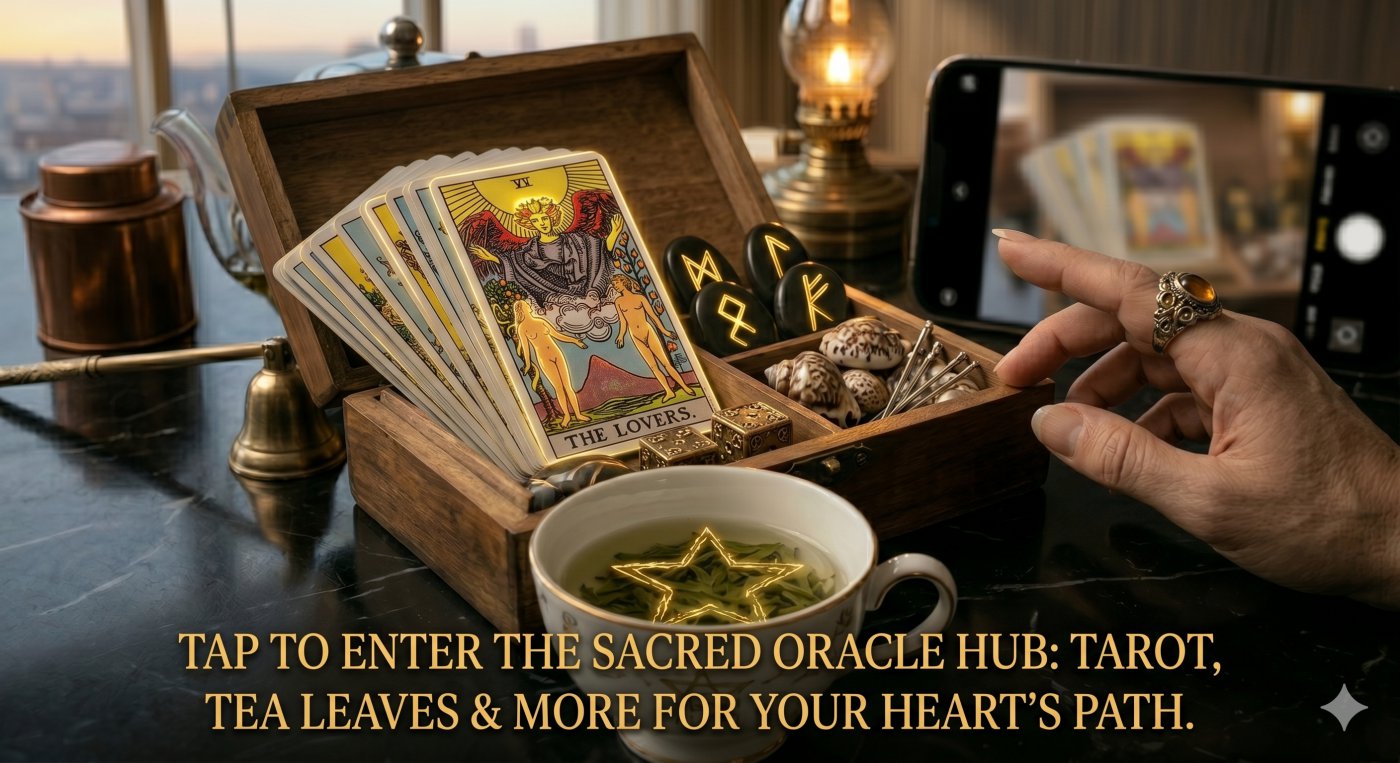
Is Tasseography Similar to Tarot?
While both are powerful tools for divination, they serve different psychological functions:
Tarot:
Uses a fixed system of 78 archetypal cards with established symbolic meanings. It provides a structured, "architectural" answer.
Tasseography:
Is fluid, organic, and entirely unique to the moment. There are no "set" images; the leaves form a "one-of-a-kind" map every time, making it a more intimate and subjective oracle that bypasses the rational mind.
The Geography of the Tea Cup: Mapping Time and Space
The Rim (The Present): Leaves near the edge represent immediate manifestations—things "at the door."
The Middle (The Near Future): The journey of the coming weeks; the process of "becoming."
The Bottom (The Abyss/Roots): Long-term outcomes, hidden truths, or ancestral influences.
The Handle Area: This represents the seeker's immediate environment—their home, their heart, and their family.
A Lexicon of Advanced Tea Symbols
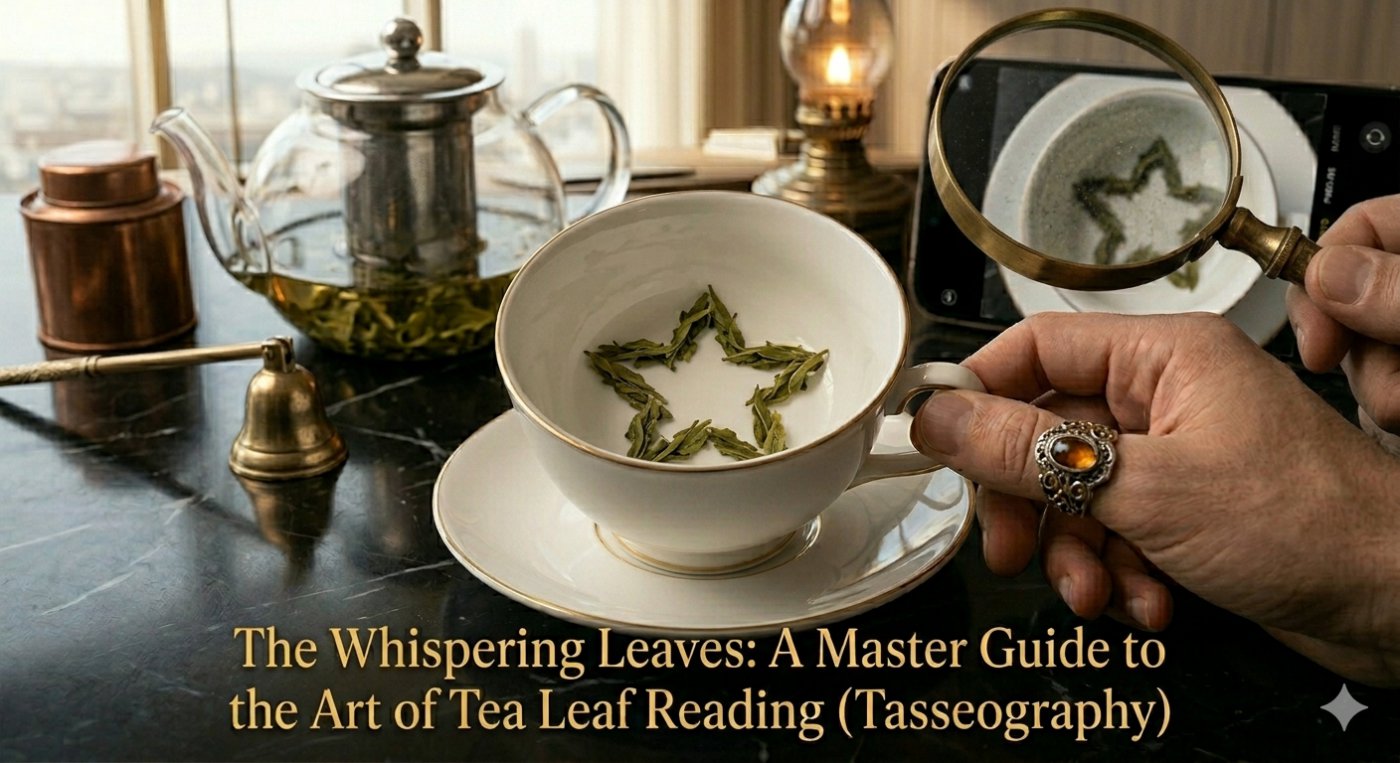
The Key: The revelation of a long-held secret or the unlocking of a new career path.
The Bird in Flight: Swift news from a distance or a sudden spiritual breakthrough.
The Serpent: Not a sign of evil, but of Kundalini—a transformation or a period of profound healing and wisdom.
The Anchor: Stability and security. If found near the rim, it predicts a "safe harbor" in a romantic relationship.
The Mountain: An ambitious goal that requires endurance. If the path around it is clear, success is inevitable.
Final Reflection:
The Living Oracle
Tea leaf reading is a poignant reminder that the universe speaks to us in whispers. Whether you are drawn to the visceral intensity of coffee or the delicate poetry of tea, the cup is merely a mirror of your own spirit.
The leaves whisper the narrative of your journey, but the Tarot provides the final "Yes or No."