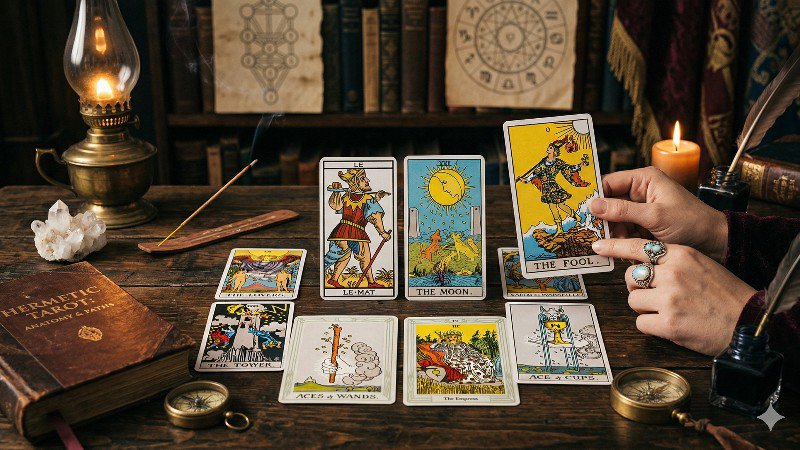
The Hermetic Mirror: A Definitive Masterclass on the Art and Anatomy of Tarot
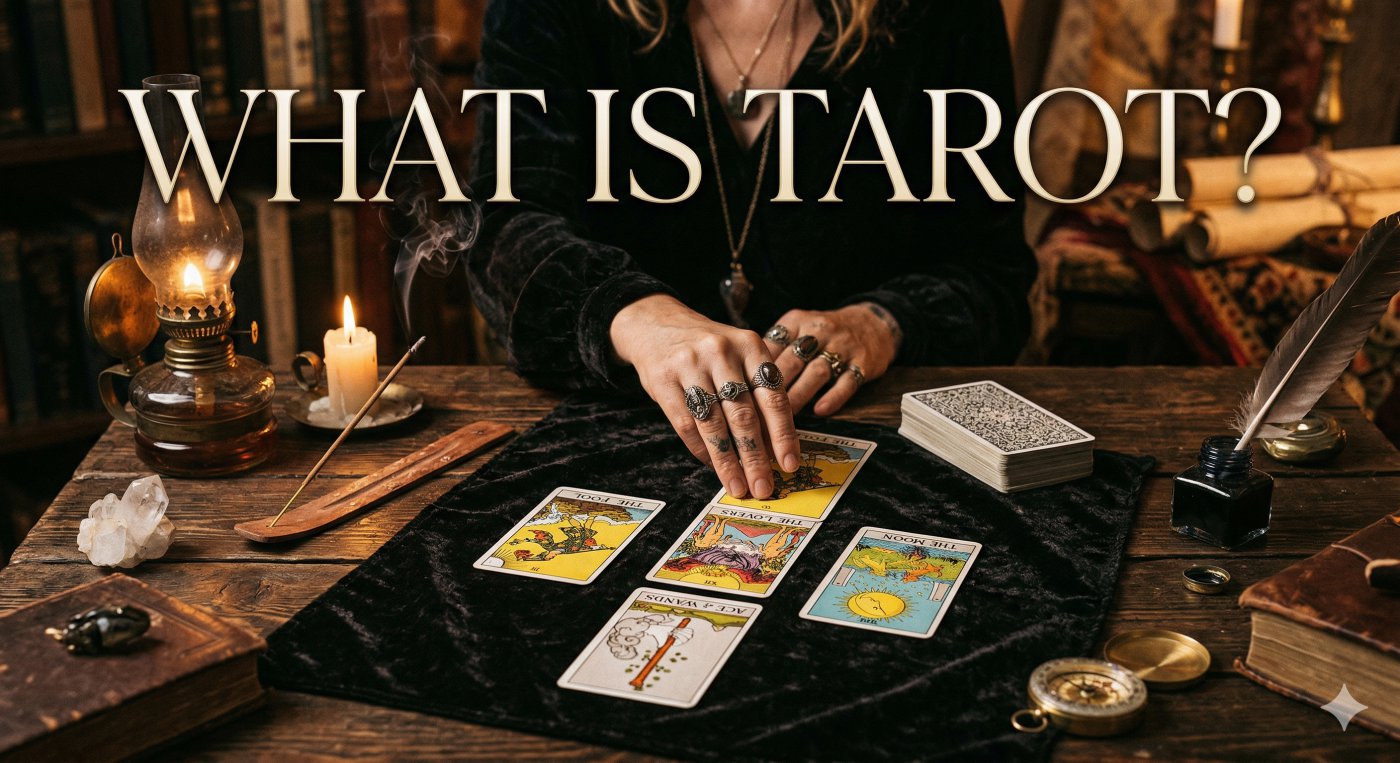
In a digital age defined by fleeting algorithms and cold data, there is a profound, lingering hunger for the symbolic. We seek meaning within the chaos, and for centuries, one tool has stood as the ultimate bridge between the conscious mind and the vast, silent ocean of the collective unconscious: The Tarot.
Far from the "fortune-telling" clichés of neon-lit parlors or pop-culture tropes, modern Tarot is a sophisticated system of archetypes. It is a Mnemonic System of the Universe, a visual synthesis of the Western Esoteric Tradition that weaves together the golden threads of the Kabbalah, Alchemy, and Ancient Astrology into a 78-card tapestry of human existence.
I. The Mathematical Rigor: Defining Tarot vs. Oracle
In the world of cartomancy, there is a sacred geometry and a systemic rigidity that must be respected. Today, thousands of "Oracle decks" flood the market with beautiful, free-form imagery. While Oracles are powerful tools for reflection, they are not Tarot.
To be technically classified as Tarot, a deck must strictly possess a rigid, 78-card structure that acts as a mathematical mirror to the Microcosm and the Macrocosm:
1. The 22 Major Arcana (The Atus)
These represent the "Fool’s Journey"—the macrocosm of our existence. In the esoteric tradition, these 22 cards correspond to the 22 paths on the Kabbalistic Tree of Life, connecting the ten Sephiroth (divine emanations). From the innocence of The Fool (0) to the spiritual completion of The World (XXI), these cards depict the spiritual Magnum Opus (Great Work) of the soul. When they appear in a reading, they signal "big picture" energy, karmic shifts, and life-altering lessons that transcend daily life.
2. The 56 Minor Arcana
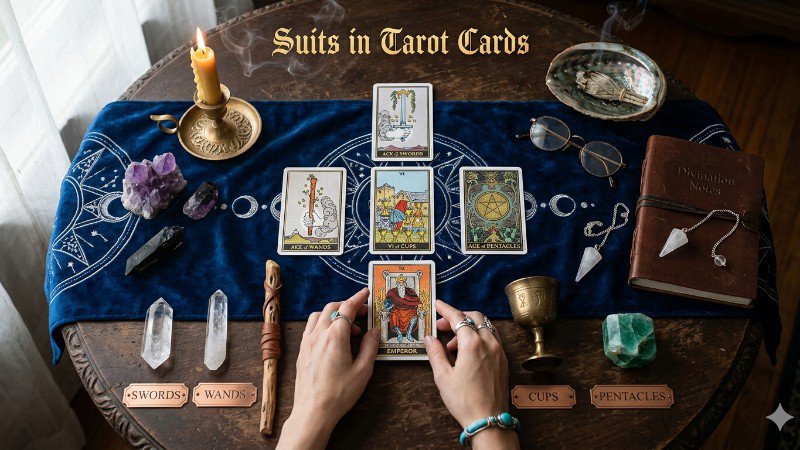
These represent the "microcosm," or the daily ebb and flow of the human experience. They are divided into four elemental suits that ground the spiritual journey into the physical realm:
Wands (Fire): The spark of ambition, creative drive, and the will to act. Linked to the Spirit.
Cups (Water): The fluid realm of emotions, relationships, and the subconscious. Linked to the Soul.
Swords (Air): The sharp edge of intellect, communication, and mental conflict. Linked to the Mind.
Pentacles (Earth): The tangible world of career, health, and physical manifestation. Linked to the Body.
The Rule of 78: This structure is a universal map. If a deck contains 30, 44, or 100 cards, it is technically an Oracle Deck. An Oracle creates its own rules and boundaries; the Tarot follows a systemic, historical language that has been refined over centuries.
II. The Genesis: From Italian Aristocracy to Occult Mystery
The documented history of Tarot begins in 15th-century Italy. Originally known as tarocchini or trionfi (triumphs), these were luxury playing cards commissioned by aristocratic families like the Visconti-Sforza. At their inception, they were used for a game similar to modern bridge, but their imagery was already deeply rooted in Renaissance philosophy and the medieval "Triumph" processions.
It wasn't until the late 18th century, through the works of French occultists like Antoine Court de Gébelin and Jean-Baptiste Alliette (Etteilla), that the cards were "rediscovered" as a vessel for ancient wisdom. They proposed that the cards were actually the lost "Book of Thoth" from ancient Egypt. While historical evidence points to Italy, this "Egyptian myth" sparked the transformation of Tarot from a parlor game into a profound tool for theurgy, hermeticism, and self-mastery.
III. The Titans of the Tarot: A Comparative Study of Influential Decks
For a professional Tarot Reader, the choice of a deck is not merely an aesthetic preference; it is a choice of "symbolic dialect." Each major system offers a different depth of field and a different philosophical focus:
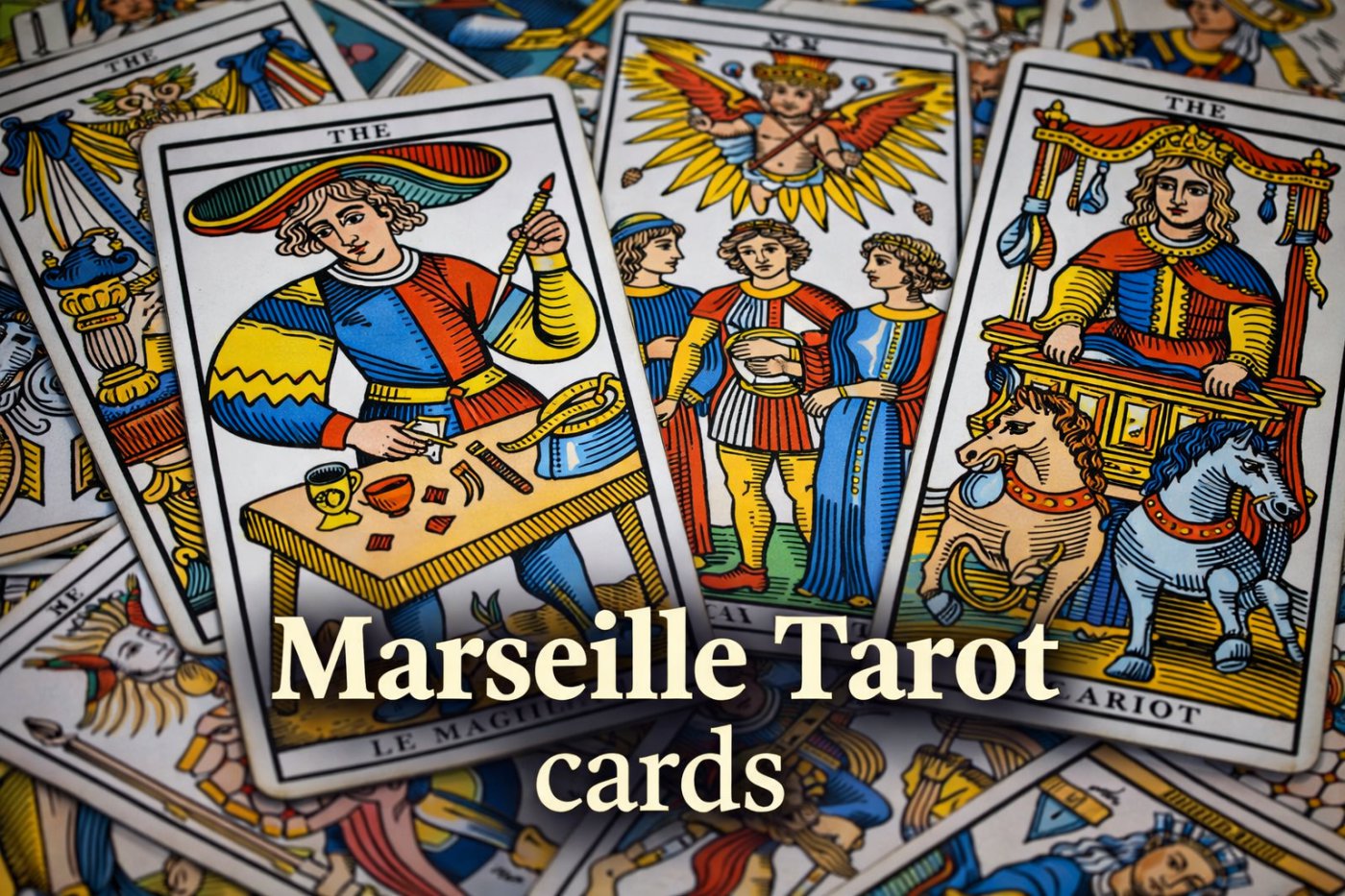
1. The Tarot de Marseille (TDM): The Ancestral Blueprint
Dating back to the 17th century, the Marseille deck is the most "naked" form of Tarot. Its woodblock-print aesthetic and primary color palette (red, blue, yellow) evoke a primordial simplicity.
The Challenge of the "Pips": Unlike modern decks, the Minor Arcana in the TDM are "pips" (the 5 of Swords is literally just five swords). Because they are non-scenic, the reader cannot rely on "feeling" a story in the illustration. They must master Sacred Numerology and the optical language of geometric pointers and shapes. It is the deck of pure, objective logic and structural truth.
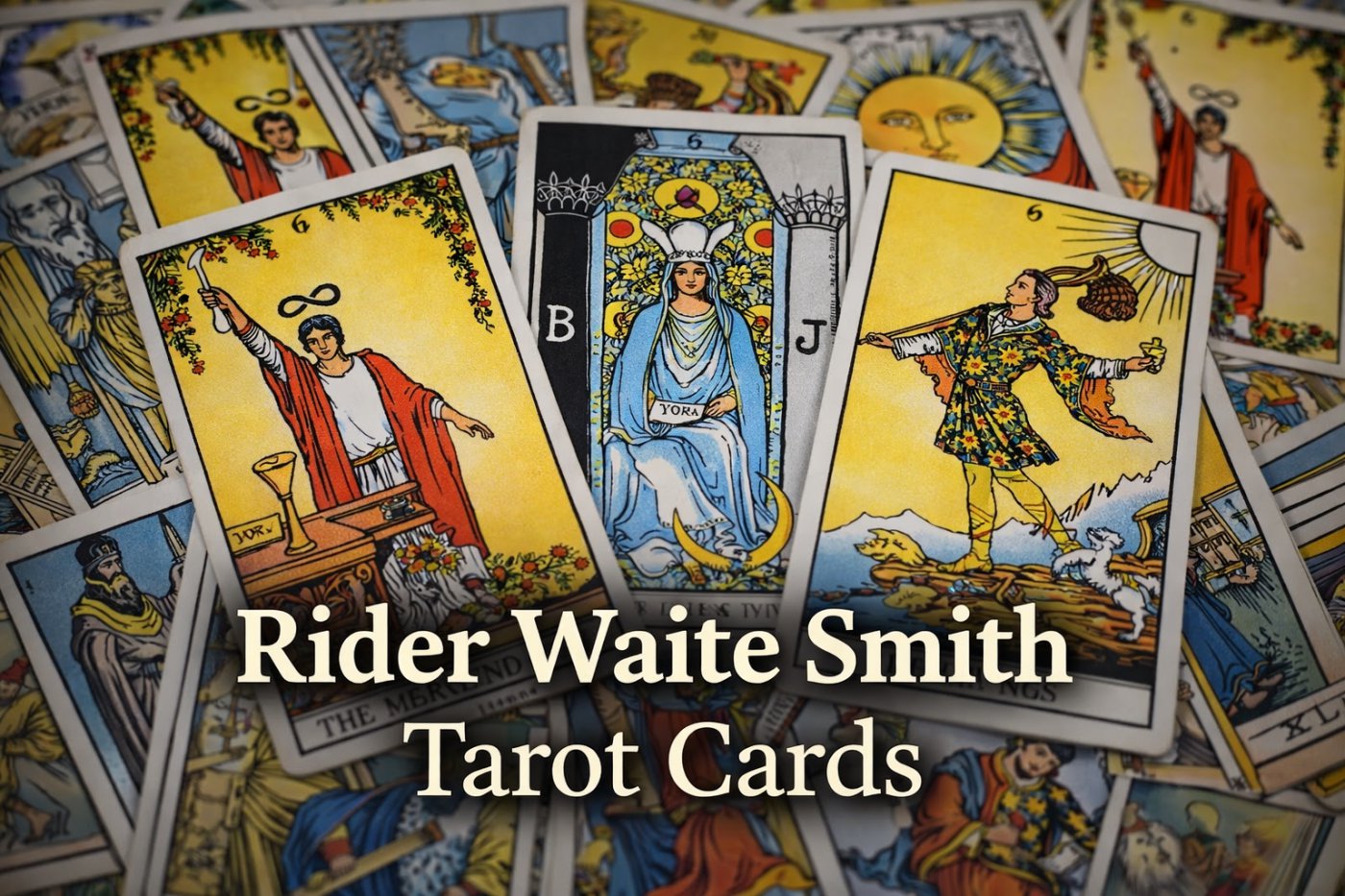
2. The Rider-Waite-Smith (RWS): The Narrative Revolution
Published in 1909, this is the most famous deck in the world. Created by Arthur Edward Waite and illustrated by the visionary Pamela Colman Smith, it revolutionized the craft by adding full scenic illustrations to the Minor Arcana.
The Alchemy of the Image: By translating high-level occult secrets (from the Order of the Golden Dawn) into folk, Christian, and liturgical iconography, the RWS "democratized" Tarot. It allows the reader's subconscious to react directly to narrative scenes, making it the most intuitive and powerful psychological mirror in history.
3. The Thoth Tarot: The Scientific Occultism
Created by the legendary Aleister Crowley and painted by Lady Frieda Harris, the Thoth Tarot is a masterpiece of synthetic esotericism.
The Synthesis: This deck incorporates Quantum symbols, Astrology, Alchemy, and the Kabbalah into every single card. It replaces "Pages" and "Knights" with "Princesses" and "Princes," shifting the elemental balance. It is an "intellectual" deck, designed for those who seek the raw, unfiltered laws of the universe through the lens of astrological decans and planetary dignities.
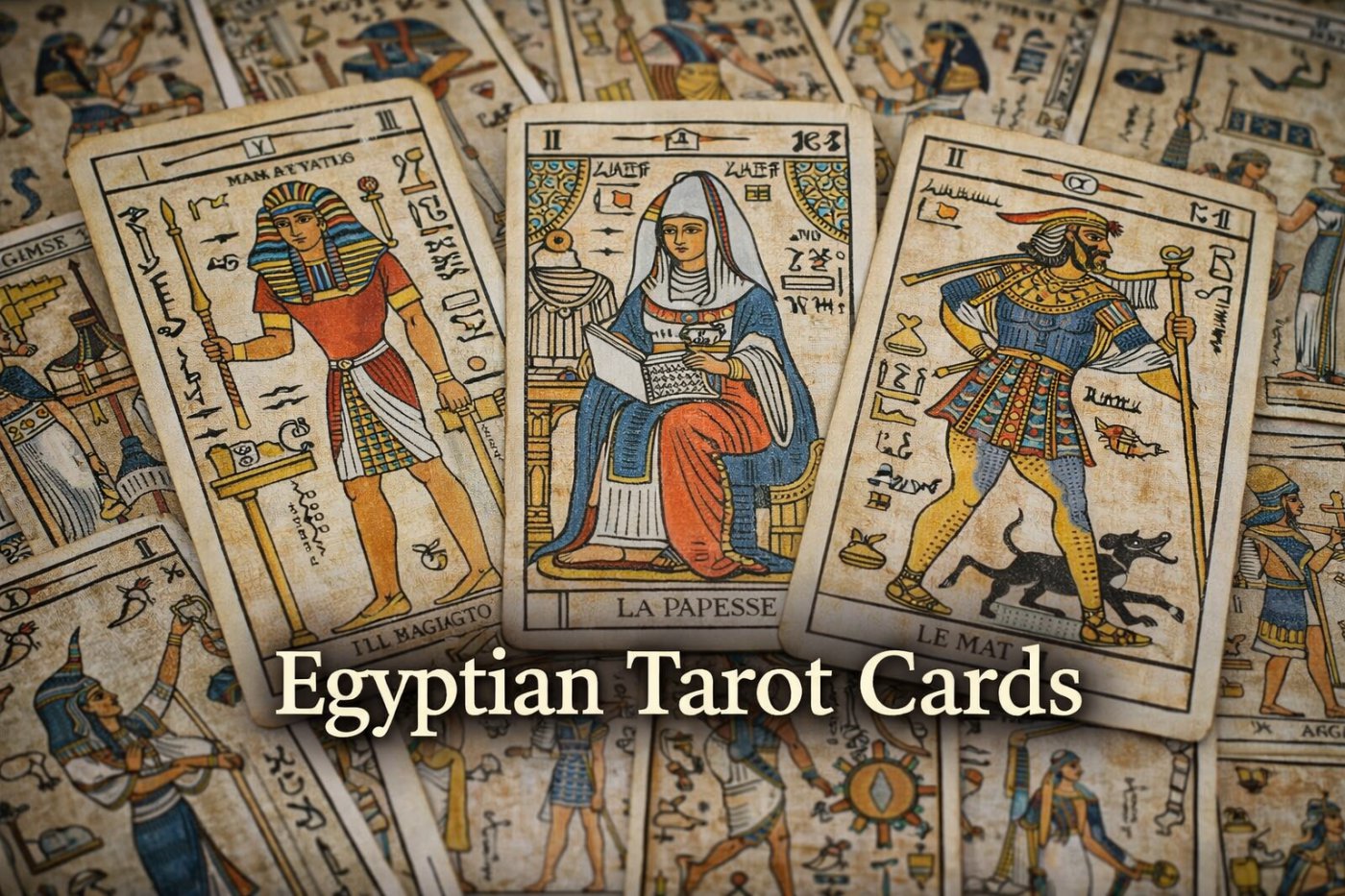
4. The Egyptian Tarot: The Gateway to the Ancients
The Egyptian Tarot (such as the Kier lineage) remains one of the most fascinating and respected variations. It is rooted in the belief that Tarot is the primordial current of Hermetic secrets.
The Triple Plane: Each card is typically divided into three distinct horizontal sections: the Superior Plane (Spiritual/Divine), the Middle Plane (Mental/Psychological), and the Inferior Plane (Physical/Material). This structure forces the reader to analyze a situation through the lens of "as above, so below," offering a highly deterministic, mystical, and karmic reading.
IV. The Anatomy of a Code: Deciphering the Symbology
A Tarot card is never just a picture; it is a cryptogram. To "read" Tarot at a premium level, one must understand the layers of coding embedded in the illustrations:
Kabbalistic Geometry: Each card has a specific place on the Tree of Life. For example, the four Aces represent Kether (the Crown), the first emanation of the divine. Understanding this allows the reader to see the "density" of the energy involved.
Astrological Correspondence: The Tarot is synchronized with the cosmos. The 22 Major Arcana correspond to the 12 Zodiac signs, the 7 sacred planets, and the 3 primordial elements (Fire, Water, Air). The Minor Arcana are linked to the Astrological Decans, providing precise timing and nuances to the reading.
Liturgical and Hermetic Icons: Notice the colors of the robes, the direction of a character's gaze, or the presence of specific flowers. In the Rider-Waite-Smith, for instance, the yellow sky often represents the light of consciousness, while a crown may represent the connection to the divine Kether.
Alchemical Stages: Many cards represent stages of the alchemical process—Nigredo (blackening/death), Albedo (whitening/purification), and Rubedo (reddening/fruition).
V. The Soul of the Cards: The Reader as the Alchemist of Meaning
Ultimately, a Tarot deck, by itself, is a silent collection of inert archetypes. It is a "Dead Language" until it meets a Tarot Reader—the bridge between the ancient codes and the seeker’s reality.
The Tarot is a dense tapestry of encrypted data. Every card is an intricate puzzle composed of esoteric symbols and geometric secrets. It is the practitioner who breathes life into these symbols. A skilled reader doesn't just "read" cards; they decipher a cosmic language. They act as the alchemist who synthesizes the symbols, the history, and the intuition into a coherent and transformative message.
The Tarot acts as a mirror, but the cards are silent without the reader’s years of study and sharpened intuition. The reader is the one who polishes that mirror, allowing the seeker to validate their own inner gnosis, find clarity in the fog of uncertainty, and connect with the "Invisible Thread" of light that binds their current choices to their ultimate destiny.
VI. Comprehensive FAQ: Deep Insights and Common Myths
1. What are the benefits of using Tarot?
Tarot serves as a tool for self-reflection, identifying subconscious patterns, and providing clarity for decision-making. It offers a new perspective on complex life situations.
2. What is a Tarot reading?
A reading is the process of interpreting the symbolic language of cards drawn in response to a specific intention, providing a snapshot of the energies surrounding a situation.
3. What is a Tarot spread?
A spread is a specific layout where each position has a meaning (e.g., Past, Present, Future). The most famous is the Celtic Cross.
4. Is Tarot associated with any specific religion?
No. While it uses symbols from various faiths, it is a philosophical and psychological system, not a religion. It is practiced by people of all backgrounds.
5. How do you learn to read Tarot cards?
By studying historical symbology (Kabbalah, Astrology, Numerology) and the development of personal intuition through daily practice and meditation on the archetypes.
6. Do you need a special "gift" to read Tarot?
No. Like music or mathematics, it is a skill that can be learned by anyone with dedication. It is a human technology for insight.
7. What are the differences between Tarot and a standard deck of cards?
Standard decks evolved from the Minor Arcana and lack the 22 Major Arcana, which are essential for the deep archetypal work and spiritual mapping of the Tarot.
8. When did Tarot cards start being used for fortune-telling?
While used for games since the 1400s, their primary shift toward divination and esoteric study occurred in the late 18th century (c. 1781).
9. Is Tarot witchcraft or black magic?
No. Tarot is a neutral tool for insight. It does not involve spells, harm, or "dark" pacts. The intention and ethics depend entirely on the practitioner.
10. Are Tarot readings pagan or "evil"?
Tarot cards are inanimate objects. They reflect the human experience. They are not "evil" and do not bring bad luck; they simply mirror reality.
11. Is Tarot paranormal or a sin?
Tarot is better understood through Synchronicity (as defined by Carl Jung). Whether it is a "sin" is a matter of personal religious belief, but many see it as a tool for divine self-knowledge.
12. Is Tarot real? Do Tarot cards really work?
Tarot "works" by triggering the subconscious mind to recognize hidden truths and patterns through archetypal imagery and meaningful coincidence.
13. How true is a Tarot card reading? / Are tarot cards really work?
A reading reflects probabilities and current trajectories. Its "truth" lies in its resonance with the seeker’s reality and the actionable clarity it provides.
14. Can a normal person do a Tarot reading?
Absolutely. Any person can learn the system and provide effective, insightful readings with proper study and respect for the tradition.
"Does your heart seek answers that the mind cannot find?"
Beyond the archetypes lies the truth about your connections. If you are navigating the complexities of love, let the cards illuminate your path. [Click here for your Free Love & Relationship Tarot Reading] and discover what the universe has in store for your heart today.